The SABRENT USB-C & USB-A SD/Micro SD Card Reader review is for anyone who needs one small adapter to access camera or device cards on computers with either connector type.
Its dual slots and USB 3.0 interface suit routine photo, video, and file transfers, while actual speed depends on the card and connected device.
SABRENT Card Reader Review Summary
The quick verdict
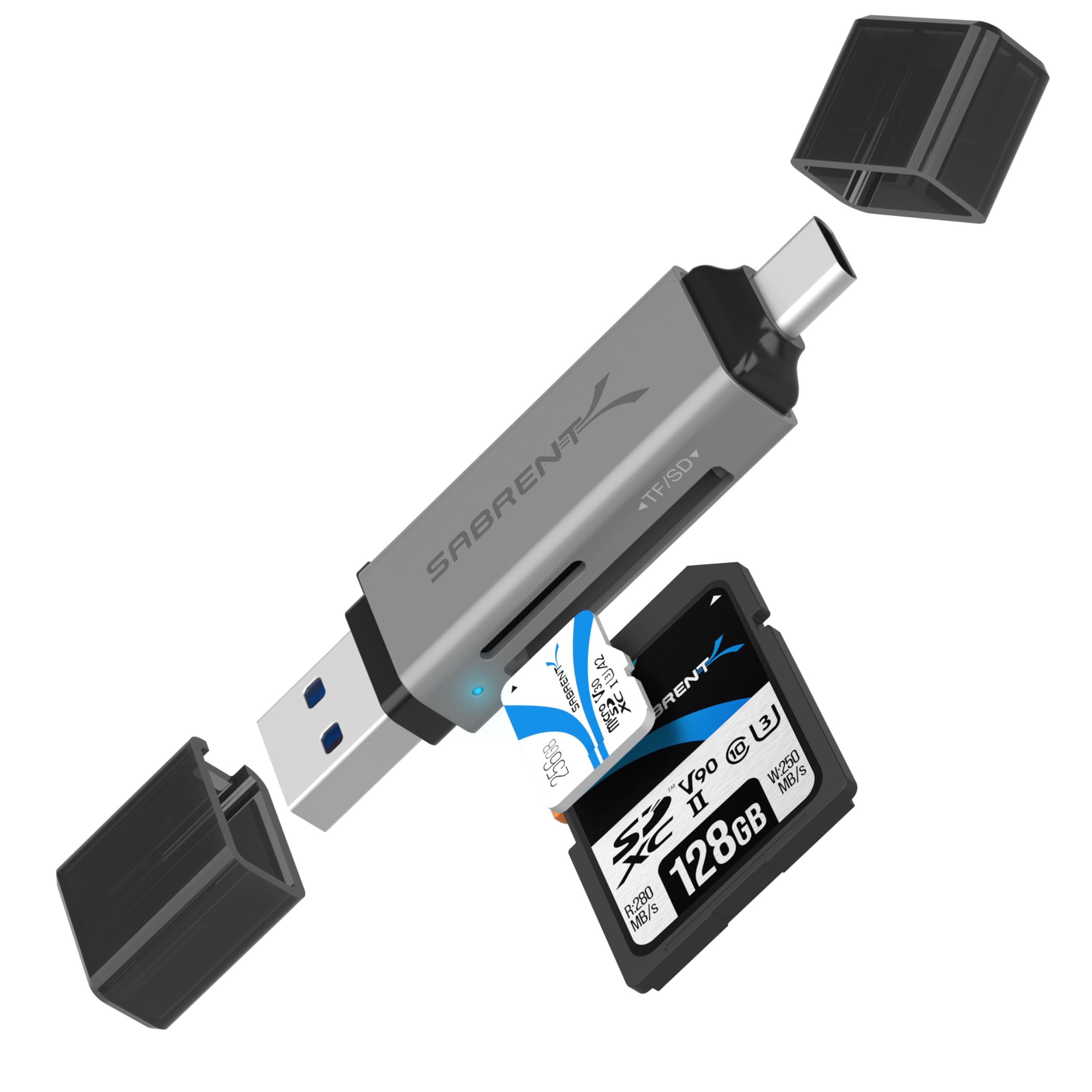
2,000+ ratings
Read Amazon ReviewsSABRENT USB-C & USB-A SD/Micro SD Card Reader
A compact card reader for people moving files between supported USB-C and USB-A devices and SD or microSD cards.
- USB-C and USB-A connectivity for use with supported modern and traditional host ports.
- Two slots accommodate full-size SD and microSD cards.
- Supports SD, SDHC, SDXC, microSD, microSDHC, and microSDXC formats.
- USB 3.0 interface specified at up to 5Gbps, with backward compatibility for USB 2.0.

Pros
- Combines USB-C and USB-A connections in one portable reader.
- Handles both full-size SD and microSD card families used in many cameras and everyday devices.
Consider before buying
- The USB 3.0 figure is an interface maximum, not a guarantee of card-to-device transfer speed.
- Android use is limited to compatible devices, so check your specific phone or tablet before relying on it.
Read the full review summary
This reader combines USB-C and USB-A connectivity with slots for full-size SD and microSD cards.
That makes it a practical choice for moving files from supported cameras, dash cams, and other everyday devices to a laptop or PC without keeping separate readers for each host connector.
Its appeal is straightforward portability and broad card-format support, plus plug-and-play use on Windows, macOS, and compatible Android devices.
Consider it when you want a compact reader for common SD-family cards; check your device’s port and operating-system compatibility before buying, especially if you plan to use it with a phone or tablet.
The buying factors
SABRENT Card Reader Scorecard
Editorial scores reflect listed features and buyer fit; they are not laboratory measurements or customer ratings.
Connector flexibility
USB-C and USB-A make the reader useful across newer and traditional ports.
Card format coverage
It supports common SD and microSD families, including SDHC, SDXC, microSDHC, and microSDXC.
Transfer interface
USB 3.0 is specified up to 5Gbps, with USB 2.0 backward compatibility; real transfers also depend on the card and host.
Setup simplicity
The stated plug-and-play design requires no driver or software installation on supported systems.
Portability
Its compact, lightweight design and activity indicator make it convenient to carry and monitor during use.
Device compatibility
Windows, macOS, and compatible Android devices are covered, but Android support is conditional on the device.
Key Features and Specifications of SABRENT Card Reader
- USB-C and USB-A connectivity for use with supported modern and traditional host ports.
- Two slots accommodate full-size SD and microSD cards.
- Supports SD, SDHC, SDXC, microSD, microSDHC, and microSDXC formats.
- USB 3.0 interface specified at up to 5Gbps, with backward compatibility for USB 2.0.
- Plug-and-play operation on Windows, macOS, and compatible Android devices; no driver or software installation is required.
- Compact, lightweight form with a built-in LED activity indicator.
Pros and Cons of SABRENT Card Reader
Pros
- Combines USB-C and USB-A connections in one portable reader.
- Handles both full-size SD and microSD card families used in many cameras and everyday devices.
- USB 3.0 support offers a suitable interface for moving larger photo and video files.
- Straightforward setup avoids a separate driver-installation step on supported systems.
Consider before buying
- The USB 3.0 figure is an interface maximum, not a guarantee of card-to-device transfer speed.
- Android use is limited to compatible devices, so check your specific phone or tablet before relying on it.
- If your workflow uses card formats outside the listed SD and microSD families, confirm support before choosing this reader.
Who Should Buy SABRENT Card Reader?
Good fit
Choose the SABRENT reader if your cards are SD or microSD and you move files between devices that may have either USB-C or USB-A ports.
Having both connector types in one compact adapter can simplify a mixed-device kit, such as a laptop bag that travels between newer and older computers.
It also makes sense for occasional camera, dash-cam, or everyday card transfers when simple setup matters.
The activity light gives a visible cue while the reader is in use, and the USB 3.0 interface is a sensible fit for photo and video file handling when the card and host can make use of it.
Before purchase, confirm that your card fits one of the supported formats and that your intended Android device is compatible if relevant.
Think of the stated 5Gbps as the interface ceiling: card performance and the host connection affect the speed you will actually see.
Who should skip it
Skip this model if your workflow requires a card format beyond the listed SD and microSD families, unless you confirm that the format is supported.
It may be a poor fit if you need guaranteed transfer speeds or depend on Android compatibility that you have not checked for your particular device.
How the SABRENT Card Reader Fits Everyday Transfers
One reader for two common host ports
USB-C and USB-A support give this reader flexibility when the computers in your routine do not all share the same connector.
That can reduce the need to carry separate adapters for older and newer laptops or PCs, while still keeping the device small enough for a camera case or bag.
Dual slots cover common camera cards
The full-size SD and microSD slots cover several common card generations, including SDXC and microSDXC.
This makes the reader relevant to a range of card-based devices, but buyers should match their specific card to the listed formats rather than assume every memory-card type is supported.
USB 3.0 is useful, with limits
A USB 3.0 interface rated up to 5Gbps provides headroom for file transfers, and USB 2.0 backward compatibility can help when connecting to older hosts.
That figure describes the interface maximum; the card, host port, and connected system all shape actual transfer time.
Simple setup, with a compatibility check
Plug-and-play use on Windows, macOS, and compatible Android devices keeps setup uncomplicated.
The Android qualification matters: if phone or tablet use is central to your purchase, verify the particular device supports this kind of reader before depending on it.
Alternatives to SABRENT Card Reader
One useful alternative is included; compare the ports and card formats you need before choosing another model.
Computer Memory Card Readers alternative
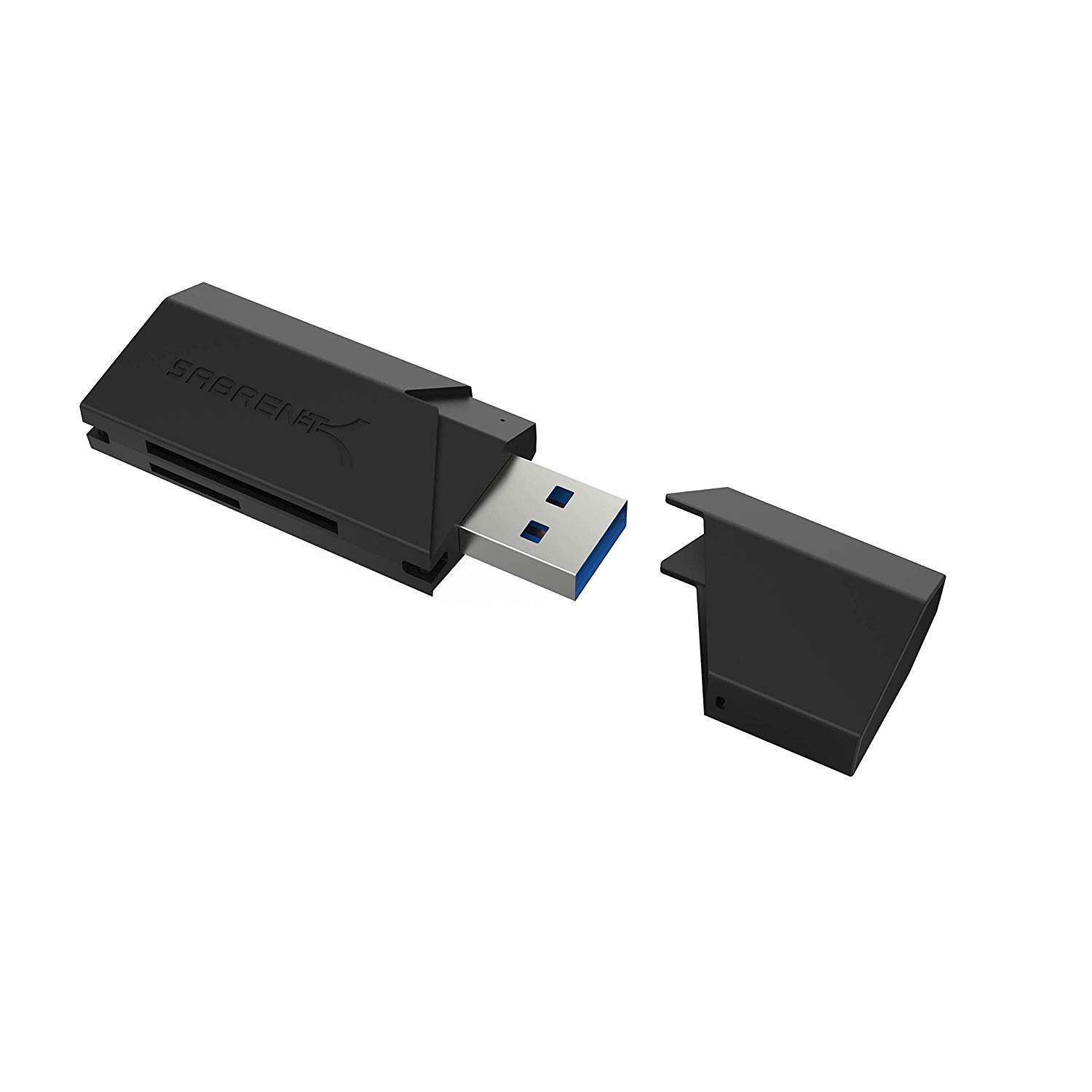
10,000+ ratings
Read Amazon ReviewsSABRENT SuperSpeed 2 Slot USB 3.0 Flash Memory Card Reader (CR-UMSS)
Consider the CR-UMSS if MMC or T-Flash support is useful and USB-A is the connection you need.
Choose the reviewed model when USB-C connectivity alongside USB-A is the more useful distinction; compare the listed card formats with your own cards.
- The CR-UMSS supports SD, SDHC, SDXC, MMC, microSD, and T-Flash, uses USB 3.0 with USB 2.0 backward compatibility, and is powered through its USB connection.
- The USB-C & USB-A model supports SD and microSD families and offers both connector types, with an interface specified up to 5Gbps.
Is SABRENT Card Reader Worth It?
The SABRENT USB-C & USB-A SD/Micro SD Card Reader is worth considering as a portable, straightforward option for common SD and microSD transfers.
Its mix of connector types, dual slots, and plug-and-play design fits everyday use across supported computers and Android devices.
Buy it when that combination matches your cards and devices, and treat the USB 3.0 maximum as an interface specification rather than a promise of a particular transfer time.
Check Android compatibility and card format first if either is essential to your setup.
Your review at a glance
2,000+ ratings
Read Amazon ReviewsSABRENT USB-C & USB-A SD/Micro SD Card Reader
A compact card reader for people moving files between supported USB-C and USB-A devices and SD or microSD cards.
- USB-C and USB-A connectivity for use with supported modern and traditional host ports.
- Two slots accommodate full-size SD and microSD cards.
- Supports SD, SDHC, SDXC, microSD, microSDHC, and microSDXC formats.
- USB 3.0 interface specified at up to 5Gbps, with backward compatibility for USB 2.0.